When it comes to maintaining a healthy credit profile, many people focus solely on paying their bills on time. While payment history is a major factor, there’s another element that can cause your credit score to drop even if you never miss a due date—credit utilization.
Credit utilization refers to how much of your available credit you’re using at any given time. It’s one of the most misunderstood aspects of credit scoring, yet it accounts for a significant portion of your score—30% according to the FICO scoring model. Unlike late payments or bankruptcies, high credit utilization doesn’t necessarily indicate irresponsible behavior, but it can still negatively affect your credit score if it appears you’re relying too heavily on borrowed funds.
To understand why higher credit utilization decreases your credit score, it’s important to first understand how credit scoring models interpret your use of credit.
What Is Credit Utilization and How Is It Calculated?
Credit utilization is the percentage of your revolving credit that you're currently using. Revolving credit includes accounts like credit cards and lines of credit—accounts where your balance can fluctuate each month depending on how much you spend and repay.
To calculate your utilization rate, you divide the total balance on your revolving accounts by the total credit limit. For example, if you have three credit cards with a combined limit of $10,000 and you’re carrying a total balance of $4,000, your utilization rate is 40%.
The general rule of thumb is to keep your credit utilization below 30%, though individuals aiming for excellent credit scores often try to keep it under 10%. While the percentage itself seems like a small detail, it plays a major role in how lenders and credit scoring algorithms evaluate your creditworthiness.
Why High Credit Utilization Hurts Your Score
Credit scoring models are designed to assess risk. When you carry a high balance relative to your total available credit, the models assume that you may be financially stressed or overextended—even if you're making payments on time. This perceived risk leads to a lower credit score, even though you might not be doing anything “wrong” in the traditional sense.
Lenders see high utilization as a sign that you may be dependent on credit to meet your financial obligations. This makes them hesitant to extend additional credit or approve new applications. It also makes it more likely that you’ll be offered higher interest rates, stricter terms, or smaller credit lines.
What’s more, the impact of high utilization can be immediate. Unlike derogatory marks like collections or bankruptcies, which take time to appear on your credit report, utilization is updated frequently—typically once per billing cycle. This means even a temporary increase in your balance, such as booking a large purchase before paying it off, can result in a noticeable dip in your score.
Multiple Accounts and Compounding Risk
It’s not just your overall utilization that matters—individual account usage also affects your score. For instance, even if your total utilization is below 30%, having one or two cards that are maxed out can still harm your credit profile. This is because credit scoring models evaluate each account separately in addition to calculating your total utilization.
In some cases, high usage on just one account may be enough to trigger a score drop. This is especially true for individuals with fewer credit accounts or a shorter credit history, where each account holds more weight in the overall score calculation.
Credit Utilization Myths – Debunked
Let’s clear up a few common misconceptions.
❌ Myth 1: You Should Carry a Balance to Build Credit
Carrying a balance isn't necessary. You can build and maintain strong credit scores while paying your cards off in full every month.
❌ Myth 2: Utilization Only Matters at the End of the Month
Your balance is reported to the bureaus at different times—often at the statement closing date, not necessarily the due date. Even if you pay it off later, the reported balance can still appear high.
❌ Myth 3: One Card at 90% Is Okay If the Rest Are Low
One high-utilization account can still negatively affect your credit score, especially if it’s a large balance or your total credit limit is low.
Recovering from High Utilization
The good news is that credit utilization is a dynamic factor, meaning it can change from month to month. If your score dropped due to high usage, reducing your balances can help your score bounce back quickly—often within a single billing cycle once the updated balances are reported to the credit bureaus.
Some practical steps to reduce your utilization include making multiple payments throughout the month to keep balances low, requesting a credit limit increase (without increasing your spending), or spreading purchases across multiple accounts instead of using just one.
Opening a new credit card can also help by increasing your total available credit, though this should be done cautiously. New applications result in hard credit inquiries, which may temporarily lower your score, and too many new accounts can also reduce your average account age, another important factor in your credit score.
The Role of Credit Repair Services
If your credit report shows a pattern of high utilization or if you’ve experienced a drop in your credit score that you don’t fully understand, working with a reputable credit repair company may be a smart move.
While credit repair services can’t remove legitimate debt from your credit report, they can help you identify incorrect or outdated information, dispute unauthorized charges, and guide you on how to better manage your credit usage going forward. A good credit repair company will also educate you on healthy financial practices and offer personalized credit solutions tailored to your unique situation.
They will never promise to increase your score or remove accurate negative items, but they can support you in legally improving your report through responsible and compliant strategies.
Compliance Matters
It’s important to remember that credit repair companies must follow federal guidelines under the Credit Repair Organizations Act (CROA) and the Telemarketing Sales Rule (TSR). These laws protect consumers from deceptive practices and ensure that any services offered are honest, transparent, and legal.
If you're seeking help from a credit repair company, make sure they don't offer false guarantees, ask for upfront payment before work is performed, or advise you to create a new credit identity. Trustworthy companies will provide clear contracts, outline your rights, and operate within the law.
The Bigger Picture
Credit utilization isn’t just a number—it’s a snapshot of how you manage your available credit. Keeping your usage low tells lenders that you’re responsible, self-disciplined, and not dependent on borrowed money to survive.
High utilization, even without missed payments, suggests that your finances may be stretched thin. Over time, this can lower your credit scores, limit your borrowing options, and increase the cost of borrowing through higher interest rates.
By understanding how credit utilization works and making strategic decisions to manage it, you can protect and improve your credit health—whether you’re working independently or with the support of credit repair services.
Conclusion: Take Control of Your Utilization Today
Your credit score is built on multiple factors, but credit utilization is one of the most immediate and impactful. Fortunately, it’s also one of the easiest to change.
If you’ve been wondering why your credit score dropped despite never missing a payment, your utilization rate may be the culprit. Review your credit report, calculate your usage, and start making changes today.
Whether you choose to handle it on your own or seek support from a trusted credit repair specialist, taking control of your utilization is a major step toward lasting financial health.
If you’re ready to explore compliant, personalized credit repair services and discover real credit solutions tailored to your needs, reach out to a professional who understands the laws—and your goals.
Frequently Asked Questions
Q1: What is considered a high credit utilization rate?
A credit utilization rate above 30% is generally considered high and may negatively affect your credit score. For optimal impact, experts recommend keeping utilization below 10% of your total available credit.
Q2: Can credit repair companies help lower my credit utilization?
Credit repair companies cannot directly reduce your credit utilization, but they can help you review your credit report, identify reporting errors, and develop legal strategies to manage your credit better. They may also offer credit solutions to improve your overall credit health.
Q3: How long does it take to recover from high credit utilization?
Because utilization is calculated monthly, your credit score can improve as soon as your updated balances are reported to the credit bureaus. This typically happens within one billing cycle after lowering your balances.
Q4: Will paying off my credit cards in full remove negative impact from high utilization?
Yes, paying down your balances reduces your credit utilization and can lead to a noticeable improvement in your credit score, assuming other factors on your credit report remain positive. Just make sure the payment posts before your statement closing date to reflect the updated balance.
Understanding how credit inquiries impact your credit score is critical for anyone seeking financial freedom. Whether you’re applying for a loan, checking your own credit report, or considering credit repair services, knowing which inquiries matter—and which don’t—can make all the difference.
There are two main types of credit inquiries: hard inquiries and soft inquiries. One can affect your credit scores, the other has no impact at all. But not everyone understands which is which.
In this article, we’ll break down:
What a credit inquiry is
The difference between hard and soft inquiries
Which ones don’t affect your credit score
How to handle too many hard inquiries
The role of credit repair companies and credit solutions in managing your credit health
Let’s dive in.
What Is a Credit Inquiry?
A credit inquiry occurs when someone—either you or a third party—reviews your credit report. This typically happens when you apply for a loan, open a new account, or even check your score.
Each time your credit is pulled, a record of the inquiry appears on your credit report. These records help lenders assess how frequently you apply for credit, which can signal either responsible management or potential financial stress.
Types of Credit Inquiries
There are two types of credit inquiries:
1. Hard Inquiries (Hard Pulls)
A hard inquiry occurs when a lender or creditor checks your credit because you’ve applied for some form of financing. Examples include:
Applying for a credit card
Taking out a mortgage
Getting an auto loan
Applying for a personal or business loan
Hard inquiries are visible to other lenders and can slightly lower your credit score—especially if you have several in a short period of time. While one or two may only reduce your score by a few points, multiple inquiries in a short timeframe could make you look like a high-risk borrower.
Impact on your credit score: ✅ Yes, a hard inquiry can temporarily lower your credit score ✅ Usually stays on your credit report for 2 years ✅ Only affects your credit scores for about 12 months
2. Soft Inquiries (Soft Pulls)
A soft inquiry happens when your credit is checked, but not for lending purposes. These inquiries are typically:
You checking your own credit report
A pre-approved credit card or loan offer
Background checks by employers
Identity verification by utility or phone companies
Credit checks by insurance providers
Impact on your credit score: ❌ No, soft inquiries do not affect your credit scores ✅ Soft pulls are visible only to you—not to lenders ✅ You can have as many soft inquiries as needed without hurting your score
Which Credit Inquiries Have No Effect on Your Credit Score?
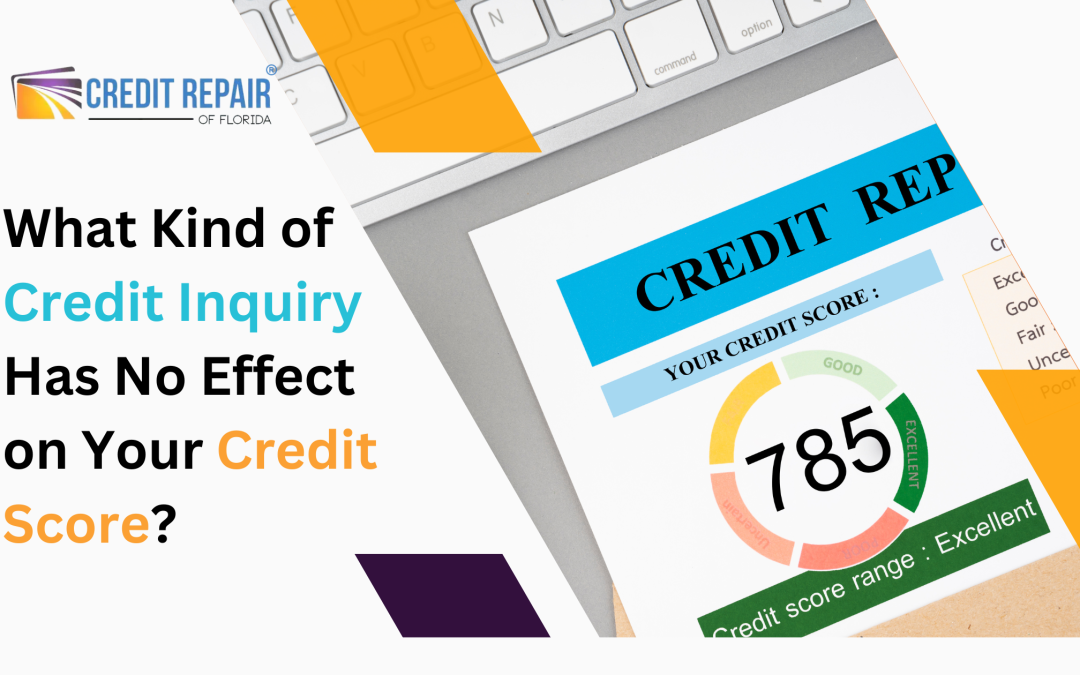
To directly answer the question—soft inquiries have no effect on your credit score.
Here are some examples of soft credit inquiries that won’t impact your score:
✅ Checking Your Own Credit Report
When you access your own credit information through annualcreditreport.com or a credit repair company dashboard, it’s recorded as a soft inquiry.
This is considered responsible behavior and is encouraged by financial experts and credit repair services.
✅ Pre-Qualification or Pre-Approval Offers
When lenders or credit card issuers do a soft pull to see if you qualify for their products, it doesn’t affect your score. You’re not applying—just being evaluated.
These offers often show up as “pre-screened” or “you’re pre-approved” notices in your mailbox or inbox.
✅ Employment Background Checks
Some employers perform soft credit checks as part of their background screening process, especially for financial or government jobs. These are soft inquiries and won’t hurt your credit score.
✅ Insurance and Utility Providers
Some auto insurance companies, phone providers, or utility companies may perform a soft inquiry when opening a new account or confirming identity. Again—no impact on your credit report.
✅ Credit Monitoring Tools and Apps
Services like Credit Karma, Experian, and many credit repair companies provide tools that allow you to check your score regularly. These are all soft inquiries.
If you’re working with a credit repair specialist, they may monitor your credit report regularly to help track changes—this is also a soft inquiry.
Why Soft Inquiries Are Important for Credit Health
Soft inquiries offer visibility without the consequences. You should never hesitate to check your own credit. In fact, monitoring your credit regularly is one of the most important habits for long-term financial wellness.
Here’s why:
You can catch errors early
You can identify signs of identity theft
You can see your progress over time
You can work with credit repair services more effectively
How Hard Inquiries Affect Your Credit Score (And What to Do About It)
While soft inquiries are safe, hard inquiries require more attention.
Multiple hard inquiries—especially in a short time—may signal risk to lenders. Here's how to protect your score:
✅ Limit Applications
Only apply for credit when necessary. Spacing out applications can reduce the cumulative impact of hard pulls.
✅ Rate Shopping Grace Period
For certain types of credit (like mortgages or auto loans), multiple hard inquiries within a short time—usually 14 to 45 days—may count as a single inquiry for scoring purposes.
✅ Dispute Inaccurate Inquiries
If a hard inquiry appears that you didn’t authorize, you can dispute it with the credit bureaus. This is something many credit repair companies assist with.
✅ Work With a Credit Repair Specialist
If your report has several inquiries you don’t recognize, working with professional credit repair services can help you investigate and take action, all while staying compliant with consumer laws.
When Should You Worry About Credit Inquiries?
Here’s a simple rule of thumb:
One or two hard inquiries every 6–12 months? Probably not a big deal
Five or more in a few months? That could raise red flags
If your credit score is already low, even a small dip can hurt your chances of approval.
Credit Repair and Inquiries: What You Should Know
Not all inquiries are harmful—but too many hard inquiries, especially when tied to financial stress, can impact your ability to access credit.
That’s where credit repair companies come in.
How Credit Repair Services Can Help:
Review your credit report and identify unnecessary or unauthorized inquiries
Dispute incorrect hard inquiries with the credit bureaus
Help you avoid additional damage from excessive inquiries
Offer tailored credit solutions based on your specific profile
Working with a trusted credit repair specialist ensures that every step taken aligns with the law and your long-term goals.
Credit Inquiries & Your Credit Report: What’s Visible to Lenders?
It’s important to know that:
Hard inquiries are visible to anyone reviewing your credit report
Soft inquiries are only visible to you—they don’t show up to lenders
This makes soft inquiries ideal for routine checks, credit monitoring, and working with credit repair services behind the scenes.
Final Thoughts: Take Charge of Your Credit Health
Credit inquiries are a normal part of using credit—but understanding the difference between those that affect your score and those that don’t is key.
Soft inquiries have no effect on your credit score. They’re safe, private, and important for managing your financial life. Checking your own report? Monitoring your score? These are not just safe—they’re smart.
Meanwhile, hard inquiries should be managed strategically. Be selective, keep records, and work with trusted credit repair companies when needed.
Need Help Managing Your Credit Report?
If your credit report shows multiple inquiries, or if you’re unsure which ones are hurting your score, it may be time to explore personalized credit solutions.
In early 2025, the Consumer Financial Protection Bureau (CFPB) finalized a rule that could have changed credit reports for millions of Americans. The rule aimed to ban the inclusion of medical debt in credit reports used by lenders—a move projected to boost credit scores by 20 points or more for roughly 15 million people.
However, in July 2025, a federal judge in Texas struck the rule down. That decision blocked what many saw as a long-overdue relief effort, arguing that the CFPB overstepped its authority under the Fair Credit Reporting Act (FCRA).
So what does this mean for you, your credit, and the medical bills you might be managing? This guide breaks down everything you need to know about the ruling, its impact, and what actions you can still take to protect your financial health.
II. What the CFPB Rule Was Supposed to Change
The CFPB’s rule was designed to eliminate a major pain point in credit reporting: medical debt. The rule, finalized in early 2025, sought to ban medical bills from appearing on credit reports altogether. According to CFPB research:
15 million Americans carried medical debt that appeared in their credit reports.
Over $49 billion in outstanding medical collections were weighing down credit scores.
Removing this data could improve scores by an average of 20 points, with an estimated 22,000 more mortgage approvals annually.
The rationale behind the rule was clear:
Medical debt is involuntary: Unlike credit card purchases or auto loans, you don’t choose to get sick.
It’s often inaccurate: Billing errors, insurance disputes, and unclear documentation are common.
It’s a poor predictor of credit risk: People with medical collections often repay loans on time despite their medical debt.
The CFPB’s goal was to ensure that a person’s access to credit wasn’t penalized by an industry rife with error-prone billing systems.
III. What the Court Said: Why the Rule Was Struck Down
On July 11, 2025, a federal district judge blocked the CFPB’s rule from taking effect. The judge sided with plaintiffs—primarily financial trade associations—who argued that the bureau exceeded its authority under the Fair Credit Reporting Act.
The court ruling did not deny the burdens of medical debt but found that the CFPB cannot unilaterally redefine what lenders can or cannot see in credit reports without congressional authorization.
As a result, medical debts over $500 may continue to appear on your credit report. This includes:
Paid and unpaid medical collections
Bills sent to collections due to delayed insurance processing
Debts from hospital stays, emergency services, or ongoing treatments
It’s a significant reversal of expected policy, and it leaves millions of Americans with medical debt vulnerable to credit score damage.
IV. What Protections Still Exist in 2025
Although the federal rule was blocked, some protections remain in place thanks to past credit bureau policy changes and emerging state laws.
A. Credit Bureau Policies
In 2023, Equifax, Experian, and TransUnion—the three major credit reporting agencies—implemented the following policies:
Medical collections under $500 are no longer reported.
Paid medical collections of any amount are no longer reported.
Consumers get a one-year waiting period before unpaid medical collections can appear on their reports.
These changes are still in effect and are the result of pressure from regulators and consumer advocacy groups—not laws. As such, they could be reversed in the future, but for now, they offer partial protection.
B. State-Level Protections
At least 14 U.S. states have enacted laws that restrict or prohibit the use of medical debt in credit reporting. A 15th state is expected to follow suit by the end of 2025.
States such as:
California, Colorado, Nevada, and Washington
New York, Illinois, and Maryland
...have laws that either ban the inclusion of medical debt entirely or impose strict requirements for reporting.
If you live in one of these states, your state law may shield you from the credit impact of medical debt—even in the absence of federal protection.
V. Why Medical Debt Still Matters to Your Credit
Despite ongoing reforms, medical debt remains on over 20% of U.S. credit reports. Its presence can have wide-ranging financial consequences:
A. Credit Score Impact
Medical debt can lower your score, particularly if it is unpaid and exceeds $500. This can:
Disqualify you from mortgage or auto loan approvals
Increase your interest rates on loans and credit cards
Raise your insurance premiums
Make renting a home more difficult
According to CFPB studies, removing medical debt could increase approval rates and reduce default predictions with little downside.
B. Disproportionate Impact on Vulnerable Groups
Medical debt disproportionately affects:
Low-income households
Black and Latino communities
Uninsured and underinsured individuals
Those in the South and Midwest
A Kaiser Family Foundation (KFF) study showed that people in these groups are more likely to carry large balances and less likely to resolve disputes quickly due to systemic barriers.
VI. What Consumers Should Know and Do Now
With medical debt still affecting credit in most states, here’s what you can do to protect your score:
1. Check Your Credit Reports Regularly
You are entitled to one free credit report every week from each bureau at AnnualCreditReport.com. Check your report for:
Medical collections
Inaccurate balances
Accounts listed multiple times
Debts that have been paid but not updated
2. Dispute Errors Promptly
The FCRA gives you the right to dispute incorrect or unverifiable information. This includes:
Incorrect amounts
Duplicate collections
Debt that’s not yours
Insurance delays that caused collections
Submit a written dispute directly to the credit bureau or use their online portal. Include documentation like payment receipts or insurance letters.
If they fail to validate, request that the debt be removed from your credit report.
4. Negotiate with Medical Providers
Hospitals often offer:
Financial hardship programs
Income-based sliding scales
Interest-free payment plans
Negotiating directly can prevent your account from being sent to collections. Request documentation showing you are making payments.
5. Use Nonprofit Services
Organizations like Undue Medical Debt purchase portfolios of medical debt and forgive it for free. Some local governments and churches also fund medical debt relief programs.
VII. What This Means for the Future of Credit Reporting
The court’s decision to strike down the CFPB rule raises new questions about the future of credit reporting and consumer protection.
A. State vs. Federal Regulation
With the CFPB blocked at the federal level, many states may accelerate efforts to protect their residents. This could lead to a fragmented system where your ZIP code determines your credit fate.
B. The Role of the Credit Bureaus
While the bureaus have made voluntary changes, advocates fear that without legal backing, those changes could be reversed. Maintaining public pressure is key.
C. Ongoing Advocacy
Consumer advocates are expected to continue pushing for legislative reform. Possible future developments include:
Congressional legislation to ban medical debt reporting
Additional CFPB rulemaking under other legal authorities
Updates to scoring models (FICO and VantageScore) to de-emphasize or ignore medical collections entirely
VIII. Conclusion
Although the court decision blocks the nationwide removal of medical debt from credit reports, it does not mean consumers are without options. Credit bureaus have already implemented policies that remove certain medical debts, and many states are stepping up to pass their own protections.
If you have medical debt, the most important actions you can take are:
Understand your rights
Review your credit reports regularly
Dispute inaccurate or invalid entries
Communicate with healthcare providers and collectors
Take steps to resolve legitimate balances before they hurt your credit
Credit Repair of Florida is here to help if you’re struggling with inaccurate medical debt or other damaging items on your credit report. We provide compliant, ethical credit repair services tailored to your situation.
If you’re just starting your financial journey, you might wonder: what does your credit score start at? Many people believe everyone begins with a specific number — either very low or right at the top. The truth is simpler and a little stranger: you don’t start with a credit score at all.
A credit score isn’t automatically assigned at birth, when you turn 18, or when you open a bank account. You have to establish a credit history first. Once you use credit for the first time — a credit card, a loan — the bureaus start collecting data, and after a few months of activity, your first score gets generated.
Last updated: July 24, 2026
Estimated reading time: 12 minutes
Key Takeaways
You don’t start with a credit score — you need at least one account reported to a bureau for 6+ months (or as little as 1 month for VantageScore) before one can be calculated.
“Everyone starts at 300” and “everyone starts at 850” are both myths — no one starts at either end.
Most people who use credit responsibly from day one land a first score somewhere in the 650–700 range.
Payment history and credit utilization matter most, from your very first account onward.
Secured cards, authorized-user status, credit-builder loans, and rent/utility reporting are all legitimate ways to start from zero.
The short answer is no. You are not assigned a credit score automatically.
Credit scores are calculated from information in your credit report, which is created the first time you engage in credit-related activity — taking out a credit card, financing a phone, applying for a loan. Until you do one of those things, you don’t have a credit file, and therefore no score.
According to FICO, a score can only be generated once your credit report meets these basic requirements:
At least one credit account (tradeline) reported to a credit bureau
The account has been active for at least six months
There is activity on the account within the last six months
If those conditions aren’t met, a FICO Score simply can’t be calculated. The same principle applies to VantageScore, another major scoring model, though it can sometimes score your profile sooner — with as little as one month of activity.
So when someone says “everyone starts with a 300,” that’s incorrect. You don’t have a credit score at all until you meet the basic activity requirements.
What Is the Starting Credit Score?
Once you meet the criteria to be scored, what number do you actually get? Contrary to popular belief, there’s no fixed “starting credit score” like 300 or 850. Scores in the FICO model range from 300 to 850, but your initial score depends entirely on how you use your first line of credit.
A few facts worth knowing: you won’t start with a perfect 850, because you won’t have a long enough history yet. You also won’t start at 300, unless you immediately demonstrate extremely risky behavior. Most people who use credit responsibly from the beginning receive a first score somewhere between 650 and 700.
If you make on-time payments, keep balances low, and avoid opening multiple new accounts in a short window, your starting score can land in the “good” range. Miss payments, max out available credit, or open too many accounts at once, and your score can start considerably lower. Your behavior during the first 6–12 months of credit use plays an outsized role in determining where you land.
What Determines Your First Credit Score?
Once your credit report contains enough data, a scoring model calculates your score using five weighted factors — and each one matters from your very first account.
Payment history — 35% of your score
The single most important factor. Lenders want to know if you pay your bills on time. Just one missed or late payment on your first credit card can noticeably hurt your starting score — always pay at least the minimum amount due by the statement date.
Amounts owed — 30%
This refers to your credit utilization ratio — the percentage of available credit you’re using. If you have a card with a $1,000 limit and carry a $900 balance, your utilization is 90%, which can lower your score significantly. Keeping your balance below 30% of your limit is a reasonable goal; under 10% is even better.
Length of credit history — 15%
When you’re just starting out, your history is short — that’s expected and unavoidable. This category will carry more weight over time, but your average account age still factors into your first score. Keep older accounts open as time passes to lengthen your history rather than closing them.
Credit mix — 10%
A healthy credit profile eventually includes a mix of revolving credit (credit cards) and installment loans (student or auto loans). It’s not critical for your first score, so don’t open unnecessary loans just to check this box — focus on managing one account well first.
New credit — 10%
Applying for multiple credit accounts in a short window can lower your score. Each application results in a hard inquiry, which may cause a small, temporary drop. Limit new applications, especially in your first 12 months of credit use — and if you ever spot an inquiry you didn’t authorize on your report, here’s how to remove unauthorized credit inquiries the legal way.
How to Establish Credit for the First Time
Apply for a secured credit card
A secured card requires a refundable deposit — usually $200 to $500 — and functions like a regular credit card. It’s designed for people with no credit or poor credit, reports to all three major bureaus (Experian, Equifax, and TransUnion), and helps establish both payment history and utilization. After 6–12 months of on-time payments, you may qualify for a regular unsecured card.
Become an authorized user
Ask a parent, guardian, or trusted friend to add you as an authorized user on their credit card. Their positive payment history can help you start building credit, even if you never actually use the card. Not all issuers report authorized users to the bureaus, so verify before being added.
Take out a credit-builder loan
Credit-builder loans are small loans — usually $300 to $1,000 — held in a secured account until you pay them off, with each on-time payment reported to the bureaus. These are available through credit unions, community banks, and online lenders like Self. Credit Karma also now offers its own Credit Builder product directly, after acquiring the fintech SeedFi in 2022 and folding its credit-builder technology into Credit Karma Money — worth knowing if you come across older references to “SeedFi” as a separate company, since it no longer operates as a standalone brand.
Use rent and utility reporting services
If you already pay rent or utilities, consider a service that reports those payments to the bureaus. Options include Rental Kharma, RentReporters, Experian Boost for utility and streaming payments, and newer entrants like Zillow’s CreditClimb, which launched in late 2025 and lets renters report on-time rent payments to all three bureaus for a small annual fee. None of these guarantee a score increase, but they help add positive tradelines to a thin file.
Apply with a co-signer
If you don’t qualify for credit alone, a trusted adult with good credit can co-sign a loan or credit card. You’re still responsible for payments, but their credit history can help you get approved. Be aware: if you miss payments, both your credit and the co-signer’s will be affected.
Common Myths About Starting Credit Scores
“Everyone starts at 300”
False. A score of 300 is the lowest possible value in most models, but you don’t start there — you don’t have a credit score at all until you establish credit. Once a score is generated, it’s based entirely on how you’ve used your first account, not a default starting value.
“Everyone starts at 850”
Also false. A perfect 850 represents an extended, near-flawless credit history — years of on-time payments, low utilization, a healthy credit mix, and no recent negative items. No one starts at the top.
“You automatically get a score at 18”
Not true. Turning 18 makes you eligible to start building credit, but it doesn’t create a credit file on its own. You have to open and use credit accounts to generate a score — without that activity, you remain “credit invisible.”
“Checking your own score hurts it”
One of the most persistent myths out there. Checking your own score or report is a soft inquiry, which does not affect your score at all. Regular self-monitoring is actually one of the best ways to catch errors or fraud early.
“No credit is the same as good credit”
False. Having no history isn’t the same as having a positive history. Lenders can’t evaluate your risk without data, which can actually make it harder to qualify for loans or cards compared to someone with a short but clean track record.
Need Help Building or Repairing Your Credit?
Whether you’re starting from scratch or recovering from past mistakes, Credit Repair of Florida can help you understand your credit reports and build a realistic plan going forward. If you’re weighing whether professional help makes sense for your situation, our guide to comparing credit repair companies in Florida walks through what to look for. We do not guarantee a specific score increase or approval — no legitimate company can — but we can help you dispute inaccurate items and approach your credit-building journey with a clear strategy.
How long does it take to get a credit score after opening an account?
Typically 3–6 months of activity for a FICO Score. VantageScore may generate one sooner, often in 1–2 months, if the account reports promptly.
What’s the average first credit score?
There’s no official “average” starting score, but people who use credit responsibly from the beginning often land in the 650–700 range. Irresponsible use can result in scores in the 500s or lower.
Can I raise my score quickly after starting?
It depends on your habits. On-time payments, low balances, and avoiding unnecessary inquiries can raise your score meaningfully within the first 6–12 months. Rent-reporting services may also help by adding positive history.
Do I have a credit score the moment I turn 18?
No. Turning 18 makes you eligible to open credit accounts, but a score only exists once you have at least one account reported to a bureau with enough activity to evaluate.
Building Credit From Zero
What’s the fastest legitimate way to build credit from nothing?
A secured credit card or becoming an authorized user on someone else’s well-managed account are typically the fastest starting points, since both can begin reporting activity within a single billing cycle.
Is SeedFi still available as a credit-builder loan option?
Not as a standalone company. SeedFi was acquired by Intuit in 2022 and its credit-builder technology was folded into Credit Karma’s own Credit Builder product. If you’re looking for that specific type of loan, check Credit Karma directly or compare other active providers like Self.
Does checking my own credit score before I have much history hurt it?
No. Checking your own score is always a soft inquiry, regardless of how thin your file is, and never affects your score.
Can rent payments really help build a credit score from scratch?
Yes, if they’re actually being reported — rent isn’t automatically included in your credit file. Services like Rental Kharma, RentReporters, and Zillow’s CreditClimb let you report on-time payments to the bureaus, which can help build history even before you open a traditional credit account.
This article is provided for general educational purposes and is not legal, tax, or financial advice. Scoring models, program details, and third-party service offerings change over time — confirm current terms directly with any provider before enrolling.
Buying a car with no money down sounds appealing—no large upfront payment, quicker approval, and instant access to the vehicle you need. But qualifying for a no-down-payment auto loan depends on one critical factor: your credit score.
Most lenders rely heavily on credit scores to assess borrower risk. Your score determines whether you qualify, how much you can borrow, and what interest rate you'll pay. If you’re applying for a loan without offering any down payment, the lender's risk increases. As a result, they look for borrowers with a strong credit profile.
This guide explains exactly what credit score you need to buy a car with no money down, what else lenders review during the approval process, and how to improve your chances of securing a favorable deal. You’ll also learn the potential risks and benefits of zero-down loans and what to do if your credit needs work.
II. How Credit Scores Affect Auto Loans
A credit score is a three-digit number that summarizes your credit risk based on your history of borrowing and repayment. Most auto lenders use the FICO Auto Score, a version of your credit score specifically tailored for auto financing.
The FICO Auto Score ranges from 250 to 900, compared to the traditional FICO Score range of 300 to 850. Lenders use this score to evaluate how likely you are to repay your auto loan on time.
Your score affects:
Loan approval: Higher scores mean better chances of getting approved.
Interest rates: Higher credit scores qualify for lower interest rates.
Loan amount: Better scores may allow larger loan amounts with no down payment.
Loan terms: Lower scores often mean shorter repayment periods or higher monthly payments.
Most lenders break credit scores into the following categories:
Credit Score Range
Category
Impact on Auto Loans
800–850
Excellent
Best rates, easiest approval, no down payment likely
740–799
Very Good
Very likely approval, low interest rates
670–739
Good
Likely approval, moderate interest rates
580–669
Fair
Possible approval with higher rates
Below 580
Poor
Difficult to qualify, large down payment required
A higher score doesn’t just improve your approval chances—it saves you money. According to Experian’s 2023 Auto Loan Report, borrowers with excellent credit (781–850) paid an average new car loan rate of 5.18%, while those with subprime credit (501–600) paid 14.08%.
III. What Credit Score Do You Need to Buy a Car with No Down Payment?
To qualify for a zero-down auto loan, lenders usually expect a minimum credit score of 660 or higher. This range falls within the “good” category and indicates a reliable borrowing history. However, requirements can vary by lender, loan type (new vs. used), and vehicle cost.
Here’s a breakdown:
Excellent Credit (740+)
Almost all lenders will offer no-down-payment loans.
You’ll receive the lowest available interest rates.
You may qualify for additional benefits, such as 0% APR promotions.
Good Credit (670–739)
Many lenders will still approve a zero-down loan, especially for new cars.
You may pay a slightly higher interest rate than prime borrowers.
Loan terms are usually favorable, but stricter underwriting may apply.
Fair Credit (580–669)
Approval is possible but more difficult.
Most lenders will require a down payment, though some subprime lenders may offer zero down.
Expect higher interest rates, possibly 10% or more.
Terms may include shorter loan periods and higher monthly payments.
Poor Credit (Below 580)
Very unlikely to qualify for no-money-down financing.
Lenders will usually require a large down payment (10–20% or more).
Interest rates can exceed 15%–20%.
Loan approvals often depend on additional factors like income, co-signers, or trade-ins.
No Credit History
If you have no credit, it’s very difficult to secure a loan with no down payment.
You’ll likely need a co-signer or proof of steady income and savings.
Some lenders offer first-time buyer programs, but these typically require a down payment.
Key takeaway: To get a car with no down payment, aim for a credit score of 660 or higher. If you’re under that threshold, other factors must be strong to get approved.
IV. Subprime Auto Loans and No Down Payment
If your credit score falls below 660, you’re likely in the subprime or deep subprime category. While getting a car loan with no money down in this range is more difficult, it is not impossible—especially with subprime lenders that specialize in higher-risk borrowers.
What Is a Subprime Auto Loan?
A subprime auto loan is a loan offered to individuals with limited or poor credit histories. These loans typically:
Carry higher interest rates (often between 10%–20% or more).
Include shorter terms or larger monthly payments.
May require more documentation, such as proof of income, residence, and references.
Some subprime lenders will advertise zero-down offers, but these deals often come with trade-offs:
You may be limited to certain vehicle types or older used cars.
Monthly payments may be significantly higher due to inflated interest rates.
You may be required to purchase additional insurance or vehicle protection packages.
You could be asked for a co-signer or agree to GPS tracking or starter interrupt devices as a condition of approval.
Who Offers Subprime Loans with Zero Down?
While most traditional banks avoid no-down-payment loans for subprime borrowers, certain dealership finance programs and online lenders may be more flexible.
Examples include:
Buy Here Pay Here (BHPH) dealerships: These finance in-house, often requiring no credit check. However, they charge extremely high interest and often inflate vehicle prices.
Captive finance companies: These are associated with automakers (e.g., GM Financial, Ford Credit) and may offer first-time buyer incentives or special finance options.
Online lenders: Companies like Capital One Auto Finance or Carvana may provide soft pre-approvals to subprime borrowers.
Important: Subprime loans with zero down may solve an immediate transportation need, but they come at a cost. The interest burden over time can lead to negative equity—owing more than the car is worth.
V. Factors Lenders Consider Besides Credit Score
Your credit score is important, but lenders also review several other financial indicators when you apply for a car loan. These help lenders assess your ability to repay the loan, especially when you're not providing a down payment.
1. Employment and Income Stability
Lenders want to see consistent employment and income. You may need to provide:
Pay stubs for the last 30–60 days
Tax returns or W-2s (for self-employed individuals)
Bank statements
Proof of employment tenure (2+ years preferred)
A stable job and steady income can sometimes offset a lower credit score, particularly if you're asking for zero down.
2. Debt-to-Income (DTI) Ratio
Your DTI ratio is the percentage of your monthly income that goes toward existing debts. Most lenders prefer a DTI below 40%–45%, including the potential car loan.
For example:
Monthly income: $4,000
Monthly debts (credit cards, loans, rent): $1,200
Proposed auto loan payment: $400
Total DTI: $1,600 ÷ $4,000 = 40%
If your DTI is too high, the lender may decline your application or require a down payment to reduce the loan amount.
3. Loan-to-Value (LTV) Ratio
The LTV ratio compares the loan amount to the vehicle’s value. If you want to finance the entire vehicle cost without a down payment, your LTV is 100%. This increases lender risk.
Lenders prefer LTV ratios closer to 80%–90%, which is why down payments are usually required.
4. Past Auto Loan History
If you've had a car loan before and made timely payments, this strengthens your application. A clean auto loan history signals to lenders that you can handle similar financial commitments.
5. Co-Signers and Trade-Ins
If your credit or income isn’t strong enough, a co-signer with better credit may help you qualify for zero down. Likewise, a trade-in vehicle with equity can act as a substitute for a down payment.
VI. Pros and Cons of No-Down-Payment Car Loans
Zero-down car loans offer convenience, but they come with trade-offs. It’s important to understand the benefits and risks before signing a no-money-down deal.
✅ Pros
Immediate access: You can get the car you need without waiting to save a lump sum.
Cash flow flexibility: Keep your cash for emergencies, bills, or other priorities.
Faster approval: With strong credit, approval is often quick and simple.
❌ Cons
Larger loan balance: Without a down payment, you finance the entire cost of the vehicle—plus taxes, fees, and interest.
Higher monthly payments: A bigger loan leads to higher monthly obligations.
Greater interest paid over time: Especially for borrowers with subprime credit, total interest can significantly exceed the car’s value.
Negative equity risk: You owe more than the car is worth (common in the first 2–3 years).
Stricter credit requirements: Fewer lenders offer zero down unless your credit is strong.
Key takeaway: A zero-down auto loan works best when you have good-to-excellent credit, stable income, and plan to keep the vehicle long-term.
VII. How to Improve Your Credit Score Before Applying
If your credit score is below 660 and you want to qualify for a no-down-payment auto loan, the best step you can take is to improve your credit score. Even a small increase can dramatically improve your approval odds and reduce your interest rate.
Below are five proven and compliant ways to improve your credit score before applying for a car loan:
1. Pay Down Credit Card Balances
Your credit utilization ratio—the percentage of your available credit that you’re using—affects up to 30% of your credit score. Lenders prefer utilization under 30%, and the lower, the better.
Example: If you have a $5,000 credit limit and your balance is $4,500, your utilization is 90%, which can lower your score. Paying this down to under $1,500 (30%) may boost your score within a few weeks.
2. Dispute Inaccurate Items on Your Credit Report
According to the Fair Credit Reporting Act (FCRA), you have the legal right to dispute inaccurate, outdated, or unverifiable items on your credit report. Common errors include:
File a dispute directly with the credit bureau(s) reporting the mistake
Bureaus must investigate within 30 days and either verify or remove the item.
3. Make All Payments on Time
Your payment history accounts for 35% of your FICO score. Making on-time payments consistently has the biggest long-term impact on your credit health.
Set up payment reminders or auto-pay to ensure you never miss a due date. Even one late payment can lower your score and make you ineligible for no-down-payment offers.
4. Avoid New Hard Inquiries
Each time you apply for credit, a hard inquiry appears on your credit report. Too many hard inquiries in a short period can lower your score and raise concerns about financial instability.
If you’re planning to apply for an auto loan, avoid applying for credit cards, personal loans, or store financing in the months leading up to your loan application.
5. Add Positive Tradelines Using Rent Reporting
If you’re a renter, consider using rent-reporting services like Rental Kharma. These services report your on-time rent payments to credit bureaus, adding a positive tradeline to your report.
This can:
Build your credit without taking on debt
Strengthen your payment history
Help increase your score if you have a thin credit file
Note: Rental Kharma does not remove negative items but helps add positive data.
Improving your credit score takes time and consistency. Most borrowers can raise their score by 30–100 points within 3 to 6 months by following these practices.
VIII. Conclusion
Getting a car loan with no down payment can save you from an upfront cost—but it requires strong credit and a stable financial profile. Most lenders look for a credit score of 660 or higher to approve zero-down financing. If your score is lower, approval is still possible, but interest rates will be higher, and additional conditions may apply.
Remember, lenders don’t only check your credit score. They evaluate your entire profile—income, employment history, debt ratios, and past loan performance. By understanding these factors, you can better prepare and increase your chances of securing favorable loan terms.
If your credit needs work before applying, it’s smart to start improving it now. Whether you're dealing with outdated collections, late payments, or reporting errors, you don’t have to face the credit repair process alone.
🛠 Let Credit Repair of Florida Help You Move Forward
Credit Repair of Florida provides legal, compliant, and results-driven credit repair services. We help clients:
Dispute inaccurate items
Understand their credit report
Rebuild credit over time
Prepare for major purchases like auto loans
With decades of experience and a client-first approach, our team helps you get back on track—so you can qualify for that no-down-payment car loan with confidence.
IX. FAQs
1. Can I get a car loan with no money down and bad credit?
It’s possible but difficult. Some subprime lenders may offer zero-down deals to borrowers with credit below 660, but these often come with very high interest rates, limited vehicle selection, and strict terms. In most cases, a down payment is required for subprime borrowers.
2. Is a 700 credit score good enough to get a car with no down payment?
Yes. A 700 credit score falls within the good credit range, and many lenders will approve a no-down-payment loan at that level. You’ll likely qualify for competitive interest rates and favorable loan terms.
3. Will a no-down-payment car loan hurt my credit score?
Not directly. However, taking out any new loan adds a hard inquiry and increases your debt-to-income ratio, which can temporarily impact your score. Over time, making on-time payments can help improve your credit.